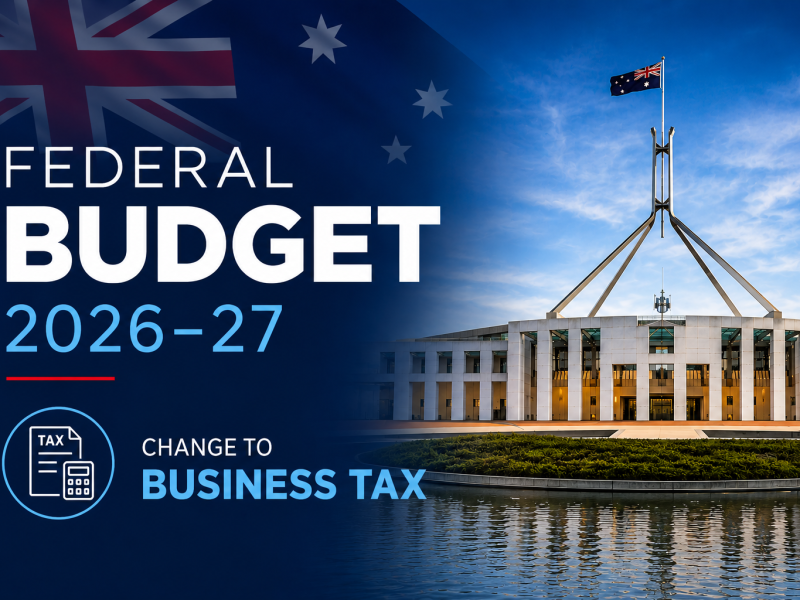
The Federal Budget 2026–27 introduces several important business taxation measures aimed at simplifying tax administration and improving cash flow for Australian businesses and start-ups.
The key business taxation announcements include:
- Permanent extension of the $20,000 instant asset write-off
- Expanded tax loss carry-back rules
- New refundable tax offsets for eligible start-up companies
These measures are designed to support investment, improve business cash flow and encourage entrepreneurship.
Permanent $20,000 Instant Asset Write-Off
From 1 July 2026
The Government has announced the permanent extension of the $20,000 instant asset write-off for eligible small businesses.
Businesses with aggregated annual turnover of less than $10 million will continue to be able to immediately deduct eligible assets costing less than $20,000.
This measure provides ongoing certainty for small business owners when purchasing equipment, tools, technology and other business assets.
How the Instant Asset Write-Off Works
Eligible businesses can:
- Immediately claim a deduction for qualifying assets costing less than $20,000
- Improve cash flow by reducing taxable income in the year of purchase
- Avoid depreciating lower-cost assets over several years
Examples of eligible assets may include:
- Computers and office equipment
- Tools and machinery
- Work vehicles below the threshold
- Business technology upgrades
- Furniture and fit-outs
The instant deduction generally applies once the asset is first used or installed ready for use.
Assets Over $20,000
Assets valued at $20,000 or more will continue to be allocated to the simplified depreciation pool under existing small business depreciation rules.
The Government also confirmed that the rules preventing businesses from re-entering the simplified depreciation regime for five years after opting out will remain suspended until 30 June 2027.
Potential Benefits for Small Businesses
The permanent extension provides greater long-term certainty for:
- Small business investment planning
- Equipment upgrades
- Technology investment
- Cash flow management
- Tax planning strategies
For many businesses, bringing forward asset purchases may continue to deliver immediate tax benefits.
Tax Loss Carry-Back Reforms
From 1 July 2026
The Government has announced reforms allowing eligible companies to carry back tax losses and offset them against tax paid in prior years.
The measure is designed to improve business cash flow during periods of lower profitability or economic downturn.
How the Loss Carry-Back Rules Work
Companies with aggregated global turnover of less than $1 billion will be able to:
- Carry back eligible tax losses
- Offset those losses against tax paid up to two years earlier
- Potentially receive a tax refund from previously paid company tax
The rules will apply to revenue losses only.
The amount available under the carry-back provisions will also be limited by the company’s franking account balance.
Why This Matters
Loss carry-back measures can provide important cash flow support by allowing businesses to access tax paid during profitable years.
This may be particularly valuable for businesses experiencing:
- Temporary downturns
- Economic disruptions
- Expansion costs
- Reduced trading conditions
- Higher operating expenses
The reforms may also improve business resilience by helping companies retain working capital during challenging periods.
Refundable Tax Offsets for Start-Up Companies
From 1 July 2028
The Budget also introduces new loss refundability measures specifically aimed at supporting Australian start-ups.
Eligible start-up companies with turnover below $10 million will be able to convert early-stage tax losses into refundable tax offsets.
Eligibility Requirements
To qualify, start-up companies must:
- Have aggregated annual turnover below $10 million
- Be within their first two years of operation
- Generate a tax loss during the eligible period
How the Refundable Offset Works
The refundable tax offset will be limited to the value of:
- Fringe Benefits Tax (FBT) paid, and
- PAYG withholding tax paid on wages for Australian employees
This means eligible start-ups may receive a cash refund despite operating at a tax loss.
Supporting Innovation and Growth
Many new businesses operate at a loss during their early growth stages while investing heavily in:
- Staff
- Technology
- Marketing
- Product development
- Expansion
The proposed refundable tax offset aims to provide additional cash flow support during this critical early phase.
This may assist start-ups with:
- Hiring employees
- Expanding operations
- Reducing financial pressure
- Improving business sustainability
Key Takeaways for Businesses
The 2026–27 Federal Budget business taxation measures are designed to improve simplicity, encourage investment and strengthen cash flow for Australian businesses.
Key measures include:
- Permanent extension of the $20,000 instant asset write-off
- Expanded company tax loss carry-back provisions
- Refundable tax offsets for eligible start-up companies
Small business owners, companies and start-ups should review how these measures may affect:
- Asset purchase decisions
- Business structure planning
- Cash flow forecasting
- Tax strategies
- Expansion plans
As with all Budget measures, legislation will still need to pass Parliament before the changes become law.
Professional tax and financial advice should be obtained to determine how the proposed measures may apply to individual business circumstances.
Source: Federal Budget 2026–27 FirstTech Briefing Paper.
Visit our Contact Us page to make time to discuss.
Disclaimer and Warning
The information above is of a general nature only. It should not be used as a source to make financial decisions. It’s also important to note that the legislation and figures related to this topic tend to change regularly and therefore the information above may not reflect the current status. We recommend that if you are looking for advice on this matter, you should contact us.